
HUL was the top gainer in the Sensex pack, rising around 2 per cent, followed by TCS, ITC, Asian Paints, HDFC, HCL Tech and Nestle India.

Equity benchmark Sensex on Monday crashed about 1,546 points to sink below the 58,000-level due to across-the-board selloff tracking sluggish global markets. Besides, persistent foreign capital outflows continued to affect the market sentiment, traders said. Benchmark indices started the session on a weaker note and the selling intensified during afternoon trade, with almost all sectoral indices ending in the red. The 30-share BSE Sensex ended 1,545.67 points or 2.62 per cent lower at 57,491.51.

Continuing their selling spree for the sixth consecutive month, foreign investors pulled out a massive Rs 41,000 crore from the Indian equity market in March on anticipation of rate hikes by the US Federal Reserve and deteriorating geopolitical environment amid the Russia-Ukraine war. Further, flows from foreign portfolio investors (FPIs) are expected to remain volatile in the near term given the headwinds in terms of elevated crude prices and inflation, experts said. According to data available with the depositories, FPIs were net sellers to the tune of Rs 41,123 crore in the equity market last month.

From the Sensex pack, Tata Motors slumped over 7 per cent. Adani Ports, Tata Steel, SBI, Power Grid, JSW Steel and Maruti were the other big laggards. However, Hindustan Unilever and Nestle ended in positive territory.

Benchmark Sensex bounced back from early lows and closed higher by nearly 376 points on Monday, snapping its four-day losing run following a rally in blue-chips ICICI Bank, HUL and HDFC Bank. The 30-share BSE Sensex rebounded 375.61 points or 0.46 per cent to settle at 81,559.54. The index opened lower and hit a low of 80,895.05 points in early trade.

After a strong run in the midcap and smallcap indices, which surged 46 per cent and 43 per cent, respectively, on the National Stock Exchange (NSE) during Samvat 2080, analysts suggest that the rally in these segments may pause to catch its breath in Samvat 2081.

'While Indian markets are indeed not inexpensive, the valuations of largecap stocks are still a considerable distance from being overstretched.'

As the results season kicks in, the quarterly earnings numbers of several blue-chip firms -- such as Infosys and Reliance Industries -- along with global trends and trading activity of foreign investors, will determine equity market movement in the holiday-shortened week ahead, according to analysts. The domestic WPI inflation data for June -- scheduled to be announced on Monday -- will also influence trading sentiments, traders said. Markets will remain closed on Wednesday for Muharram.

Undeterred by the stock market volatility, uncertainty due to the Ukraine-Russia war and high inflation, equity mutual funds continue to remain attractive choice for investors for the 15th straight month, registering a net inflow of Rs 18,529 crore in May on robust SIP numbers. This was higher than Rs 15,890 crore net inflow in April, data from the Association of Mutual Funds in India (AMFI) showed on Thursday. Equity schemes have been witnessing net inflow since March 2021, highlighting the positive sentiment among investors.

Tech Mahindra was the top gainer in the Sensex pack, rising over 3 per cent, followed by Dr Reddy's, PowerGrid, Kotak Bank, Sun Pharma, ICICI Bank and M&M. On the other hand, IndusInd Bank, Asian Paints, Maruti and Bharti Airtel were among the laggards.

From Sensex firms, Tech Mahindra, Mahindra & Mahindra, Tata Motors, UltraTech Cement, Tata Consultancy Services, HCL Technologies, ICICI Bank and Tata Steel were the biggest gainers. Sun Pharma emerged as the only laggard.

From the Sensex pack, Tata Motors, NTPC, Bajaj Finserv, Power Grid Corp, Titan, Asian Paints, IndusInd Bank, Maruti Suzuki India and Tata Steel were among the biggest gainers. Sun Pharmaceuticals, ITC, Hindustan Unilever, Bharti Airtel, UltraTech Cement and Reliance Industries were among the laggards.

Investors' wealth climbed Rs 3.20 lakh crore as markets staged a smart comeback on Wednesday after falling in the last eight trading sessions. The BSE Sensex rallied 448.96 points or 0.76 per cent to settle at 59,411.08. During the day, it jumped 513.33 points or 0.87 per cent to 59,475.45.

The Reserve Bank of India's interest rate decision, domestic macroeconomic data and global trends will dictate terms in the equity markets this week, analysts said. Trading activity of Foreign Portfolio Investors (FPIs) will also influence markets, they added. "The Indian market will be closely monitoring the Reserve Bank of India's Monetary Policy Committee (MPC) meeting scheduled for June 6-8, 2023. Aside from that, market participants will be keeping an eye on the progress of monsoon," said Pravesh Gour, Senior Technical Analyst, Swastika Investmart Ltd.
Benchmark Sensex rose by nearly 91 points to close at a fresh lifetime high while Nifty settled above the 25,400 level for the first time supported by firm global trends ahead of the much-awaited US Fed's decision on interest rates. Extending its record-setting spree for the second day, the 30-share BSE Sensex climbed 90.88 points or 0.11 per cent to settle at a lifetime high of 83,079.66. During the day, it rose by 163.63 points or 0.19 per cent to 83,152.41.
Benchmark equity indices Sensex and Nifty slumped over 1 per cent on Friday, tracking a weak trend in global markets and fresh foreign fund outflows. Falling for the third day running, the 30-share BSE Sensex tumbled 1,017.23 points or 1.24 per cent to settle at 81,183.93.

Companies in the banking, finance sector and insurance (BFSI) sector have underperformed on the bourses despite leading the earnings growth charts in the post-pandemic period. This has created a dichotomy between their earnings and share prices. BFSI companies have never been less expensive than the rest of the equity market.

The NSE Nifty 50 has slipped 3.4 per cent, or 764 points, in the last five trading sessions, after registering a fresh all-time high at 22,794.70 on Friday, May 03, 2024. In the process, the Nifty 50 index is seen quoting close to its 100-DMA (Daily Moving Average) of 21,970 for the second time in less than a month. Earlier on April 19, 2024, the Nifty 50 had tested the 100-DMA support, and then staged a smart rally of 4.7 per cent, or 1,017 points, to hit the new peak of 22,794.70.

Among the 30 Sensex firms, ICICI Bank, State Bank of India, Axis Bank, Mahindra & Mahindra, Infosys, Larsen & Toubro, Tata Steel, Tata Consultancy Services, Bajaj Finance and Adani Ports were the major laggards. Asian Paints, Hindustan Unilever, UltraTech Cement, Sun Pharma and Reliance Industries were among the gainers.

From the Sensex basket, Maruti, Mahindra & Mahindra, NTPC, JSW Steel, Larsen & Toubro, Reliance Industries, Axis Bank, and Power Grid were the major gainers. Nestle, Wipro, Tata Consultancy Services, HDFC Bank, Titan, HCL Technologies and Infosys were the laggards.

Geopolitical events, macroeconomic data and quarterly earnings of corporates would guide the stock market in a holiday-shortened week ahead, analysts said. Stock markets will remain closed on Wednesday for Ram Navami. "This week promises to be crucial for the market as fresh worries about a potential conflict between Iran and Israel emerge.
Equity markets will take cues from global trends and trading activity of foreign investors, while in the latter part of the week the first quarter earnings from IT majors TCS and HCL Technologies would guide investor sentiments, analysts said. Markets may consolidate after the record rally last week, experts added. "On the domestic front, the Q1 earnings season begins this week. Key companies such as TCS and HCL Technologies will release their earnings on July 11 and 12, 2024, respectively.

After two months of buying, foreign portfolio investors (FPIs) have turned net sellers in October by pulling out Rs 12,278 crore from Indian markets. As per depositories data, FPIs took out Rs 13,550 crore from equities but invested Rs 1,272 crore in the debt segment during October 1-29. The total net outflow stood at Rs 12,278 crore during the period under review.

Gold, a safe-haven bet, is likely to continue its record-smashing journey in the New Year, rising to Rs 85,000 per 10 grams and even Rs 90,000 level in domestic markets if geopolitical tensions and global economic uncertainties continue.

Maruti was the top loser in the Sensex pack, shedding around 3 per cent, followed by L&T, IndusInd Bank, Axis Bank, ONGC, Reliance Industries, Asian Paints and HDFC. On the other hand, HCL Tech, TCS, Sun Pharma and Tech Mahindra were among the gainers.
Equity benchmark BSE Sensex tumbled nearly 700 points to sink below the 79,000 level on Tuesday, extending its losses for the second straight day due to selling pressure in HDFC Bank, SBI and ITC amid fresh foreign capital outflows. The 30-share BSE Sensex tumbled 692.89 points or 0.87 per cent to settle at 78,956.03. During the day, it tanked 759.54 points or 0.95 per cent to 78,889.38.
2023 could be another volatile year for Indian equity markets, according to BofA. In a report, the brokerage pointed out that the Nifty50, at present, is trading at 20.7x against its long-term average of 18.8x one-year forward earnings of current Nifty constituents. Plus, India is trading at a 98 per cent premium to its emerging market (EM) peers against its long-term average of 45 per cent.

Adopting overly aggressive strategies without considering risk could lead to significant losses during the next downturn.

Global trends, macroeconomic data announcements and the start of the earnings season would be the major drivers for the equity markets in a holiday-shortened week, analysts said. Equity markets will remain closed on Thursday for Eid-Ul-Fitr. Trading activity of foreign investors, rupee-dollar trends and crude oil prices would also guide trends in markets.

India's stock markets are experiencing a shift in investor sentiment, with a 30 per cent surge in Chinese stocks, prompting investors to move money from domestic markets to China. This reversal of fortunes is a notable change from the past three years, where China's losses benefited India.

Bharti Airtel was the top laggard in the Sensex pack, shedding over 2 per cent, followed by Sun Pharma, ITC, SBI, Axis Bank, HDFC twins and Nestle India.

UltraTech Cement was the top loser in the Sensex pack, shedding around 3 per cent, followed by M&M, HDFC Bank, IndusInd Bank, Axis Bank and Reliance Industries. NSE Nifty fell 50.80 points or 0.38 per cent to 13,478.30.

Fund mobilisation by companies through equity and debt routes has dropped 20 per cent in 2022 to nearly Rs 11 lakh crore, as exuberance dwindled this year due to expensive credit avenues and volatile markets. The first half of 2023 could continue to remain challenging. The year 2021 was extraordinary for fundraising from the equity and debt routes, while 2022 has seen a slowdown in capital raising owing to elevated volatility provoked by unprecedented inflation globally and the Russia-Ukraine war.

Equity benchmarks snapped their six-session rally to close marginally lower on Thursday amid profit booking in banking and energy counters. Investors also stayed on the sidelines ahead of the RBI's policy meet outcome on Friday. In choppy trade, the 30-share BSE Sensex ended 51.73 points or 0.09 per cent lower at 58,298.80. During the day, it hit a low of 57,577.05 and a high of 58,712.66.
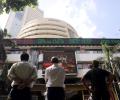
Domestic equity benchmarks ended marginally higher on Thursday, with the Nifty settling at a fresh record, amid mixed cues from global markets.

Domestic institutional investors pumped Rs 2.3 trillion into equities during H1 CY24. Of this, mutual funds contributed 80%.

Equity benchmark Sensex rebounded 454 points on Thursday, boosted by gains in index heavyweight Reliance Industries amid a positive trend in global markets.

Many retail investors, who are experiencing their first bear market, are shocked at the erosion in the value of their mutual fund (MF) portfolios. The pain is especially acute for those who had taken excessive exposure to sector/thematic and small-cap funds. Even international diversification has failed to stanch the bleed in this downturn.

Bajaj Finance was the top gainer in the Sensex pack, spurting around 4 per cent, followed by SBI, Tata Steel, HDFC, Bajaj Finserv, HCL Tech and M&M. On the other hand, ONGC, Tech Mahindra, TCS, HUL and Maruti were among the laggards.

M&M was the top gainer in the Sensex pack, jumping around 6 per cent, followed by Titan, HCL Tech, Tata Steel, Infosys and TCS. On the other hand, Axis Bank, HUL, Kotak Bank and Bharti Airtel were among the laggards.
 © 2026 Rediff.com - Advertise with us - Disclaimer - Privacy Policy - Sitemap - Feedback - About us - Terms of use - Grievances